
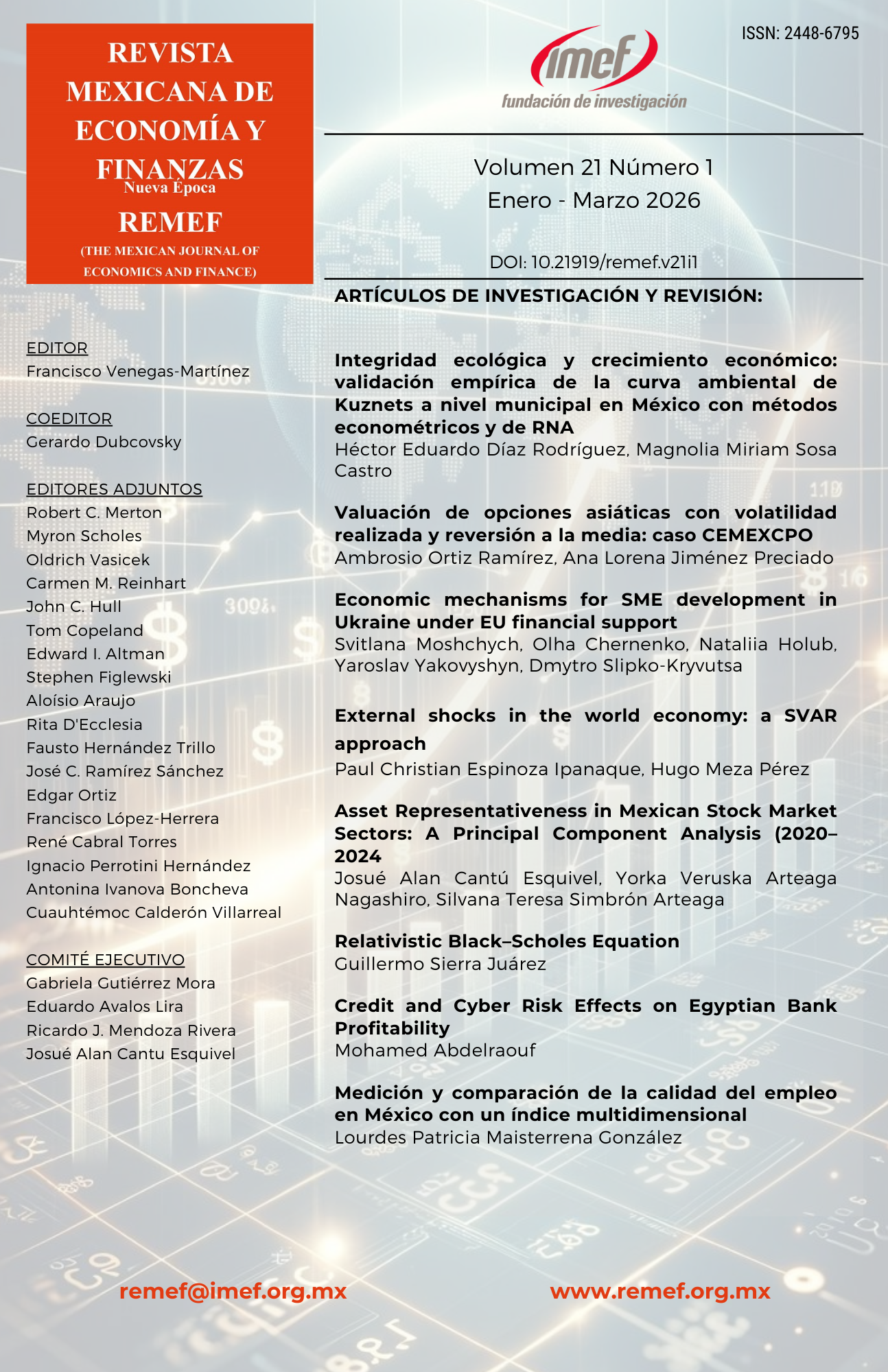
Medición y comparación de la calidad del empleo en México con un índice multidimensional
DOI:
https://doi.org/10.21919/remef.v21i1.916Keywords:
Job quality, index, multidimensional, Principal Component Analysis, decent work.Abstract
Measurement and comparison of employment quality in Mexico with a multidimensional index
This article seeks to contribute to the analysis and measurement of the quality of employment in Mexico, with the construction of a multidimensional index with which the 32 federal entities are measured and compared in two periods of time, the first quarter of 2012 and the first quarter of 2022. The applied methodology includes Principal Component Analysis and the paired t test for related data. In the construction of the index, data from the ENOE are used, which present a positive relationship with the quality of employment. The results show low quality of employment in Mexico in both periods, with a slight improvement in these 10 years in most of the variables considered in the index. Furthermore, in general, the northern states have higher quality of employment than the rest of the country. One of the limitations in the work is that not all aspects of the quality of employment are considered, due to the availability of data. The findings in this work have implications for the country's labor and social policy, particularly for the southern states, which are furthest behind in income, social security, and written labor contracts.
Downloads
Published
Issue
Section
License
Todos los Derechos Reservados © 2019 IMEF | Aviso de Privacidad IMEF | Información Legal

Este obra está bajo una licencia de Creative Commons Reconocimiento-NoComercial 4.0 Internacional.